
What Saudi Stocks Need to Regain Momentum After Years Near 11000 Points
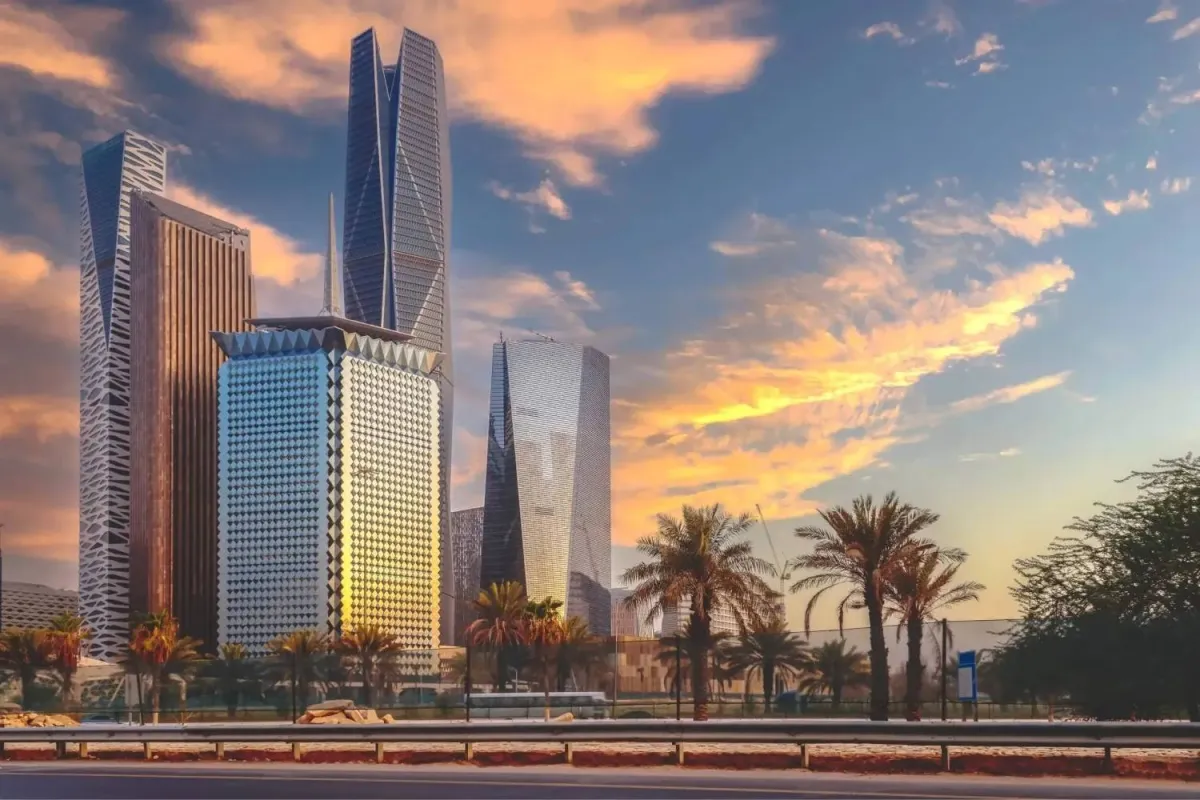
Saudi Arabia’s economy is changing rapidly. Its stock market is not.
Despite years of sweeping reforms, strong non-oil growth and heavy investment under Vision 2030, the benchmark TASI index remains fixed near 11,000 points.
That disconnect has sharpened questions over whether Saudi equities can keep pace with the Kingdom’s economic transformation - and what could push the market beyond the narrow trading range that has defined much of the past few years.
After rising above 12,000 points in late 2024, the index fell back into a range of 10,000 to 11,000 points, pressured by oil prices, interest-rate shifts, weak momentum in heavyweight stocks, liquidity conditions and investor sentiment.
Geopolitical tensions have added further strain across local and regional markets.
Analysts say headline economic growth alone is not enough to lift stocks.
Investors are focused on whether listed companies can turn economic expansion into sustained profit growth.
As the non-oil economy expands and investment spending rises, the key question is how quickly that momentum will feed through to corporate earnings and valuations.
A market in transition
Mohammed Farraj, Head of Asset Management at Arbah Capital, said the Saudi market was entering a transition towards a new growth model driven by the diversification goals of Vision 2030.
The market’s traditional reliance on banks, energy and basic materials is gradually giving way to sectors more closely tied to the kingdom’s future economy, he told Asharq Al-Awsat.
But the old structure still dominates.
Around 75% of total market earnings come from energy and banking, Farraj said, leaving the index highly exposed to swings in oil prices and interest rates.
Broadening the market’s earnings base is therefore essential.
Technology, tourism, healthcare, logistics and advanced industries need to carry greater weight if the market is to become more diversified and better reflect the economic transformation underway, he said.
New listings and privatization programs could also reshape the index over the coming years, increasing the contribution of non-traditional sectors.
New growth leaders
Technology is likely to be one of the market’s strongest future drivers, supported by digitalization, artificial intelligence and cloud computing, Farraj said.
Tourism and hospitality are also positioned to benefit from major projects, including NEOM, the Red Sea development and Qiddiya.
Healthcare offers further growth potential, supported by population growth and greater private-sector participation.
Logistics and transport could expand as Saudi Arabia seeks to establish itself as a global logistics hub, while industry and mining are expected to benefit from efforts to diversify the economic base.
The financial sector should continue to gain from economic growth and stronger demand for financing, Farraj said. But it is unlikely to remain the market’s only major engine.
Economy advances, market lags
Abdullah Almeer, Assistant Professor of Economics at King Fahd University of Petroleum and Minerals, said the expansion of non-oil activity had yet to be fully reflected in share prices.
Non-oil activities grew by 4.5% in 2025 and now account for more than 55% of gross domestic product, he told Asharq Al-Awsat.
Yet the TASI remains heavily shaped by energy and basic-materials companies, making it more sensitive to oil-price movements than the wider economy.
There is also a natural lag between investment and returns, Almeer said.
Saudi Arabia is investing heavily in infrastructure, property and tourism, but the financial impact will become clearer only as projects are completed and begin commercial operations.
Market valuations climbed in 2024, when the index reached 12,835 points in March, raising expectations for stronger earnings growth.
Corporate results failed to match those expectations, however, and the index fell to around 10,500 points by December 2025.
The weakness also extended to the parallel Nomu market, whose general index dropped 24% in 2025, while trading fell 36%.
When will the impact appear?
Almeer expects the transformation to have a clearer effect on corporate earnings in the second half of 2026 and through 2027.
By then, more projects are expected to enter operation, allowing investment spending to translate into revenue and profit.
Banks, telecommunications companies and food producers have so far been among the most successful in converting economic growth into tangible financial results, he said.
Tourism, infrastructure and industry are expected to play a bigger role in the years ahead.
Liquidity and investor appeal
Farraj said the movement of some investors into global markets should not be seen as a negative signal for Saudi equities.
It instead reflects greater investment awareness and more diversified portfolio strategies, he said.
To strengthen its appeal, the Saudi market needs more high-quality listings, deeper liquidity and a wider range of investment products, including exchange-traded funds and derivatives linked to growth sectors.
Farraj and Almeer agreed that the market must broaden the range of sectors represented in the index if it is to mirror the Kingdom’s changing economy and reduce its dependence on traditional industries.
As Vision 2030 projects move forward, investors are waiting for listed companies to convert economic momentum into durable earnings growth.
Saudi Arabia’s economic transformation is already underway. The market’s is still waiting to begin.
aawsat.com