
South Sudan rejects U.S. criticism against Kiir says sanctions undermine peace efforts
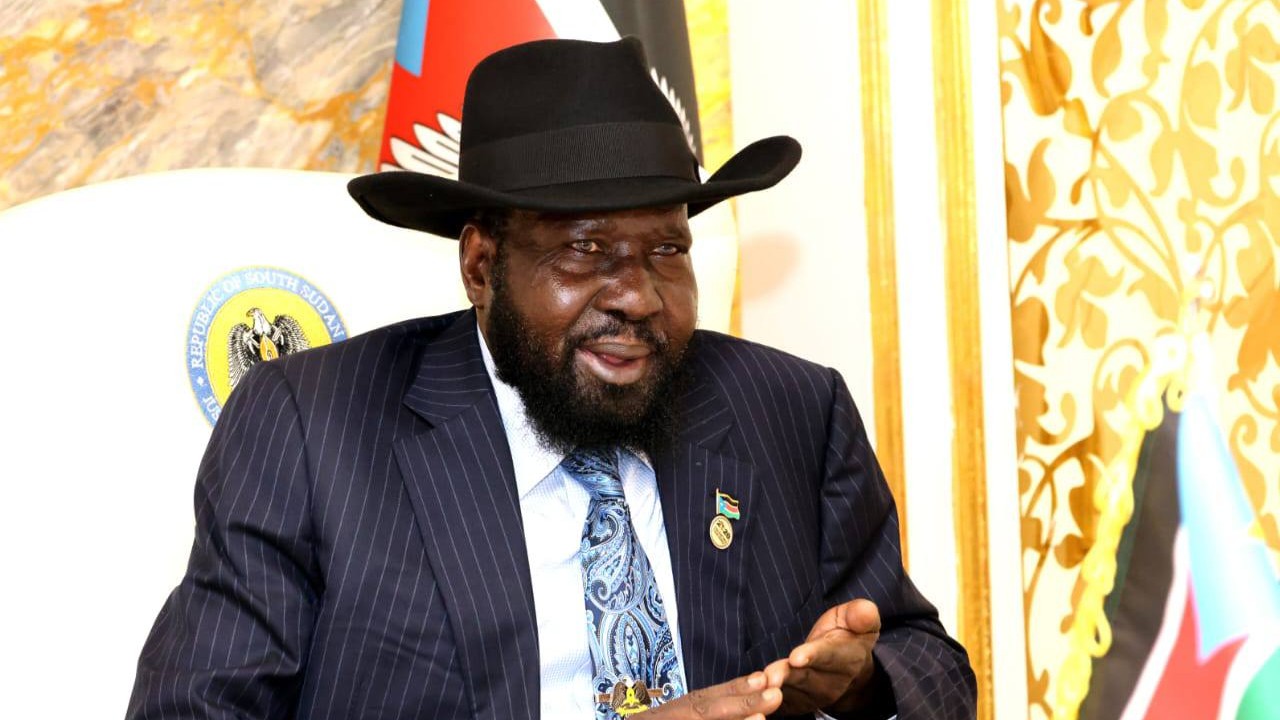

In a statement issued on Monday, the Ministry of Foreign Affairs and International Cooperation responded to remarks made by Jennifer Locetta, the Alternative Representative for Special Political Affairs at the U.S. Mission to the United Nations, following the adoption of a UN Security Council resolution extending sanctions on South Sudan until May 2027.
The response comes days after Washington, the penholder of the South Sudan sanctions regime at the UN Security Council, blamed President Salva Kiir and other South Sudanese leaders for the lack of progress in implementing key provisions of the 2018 revitalised peace agreement.
Rejecting the characterisation of the country’s leadership, the government said Kiir remains the principal driver of the peace process and has consistently demonstrated commitment to national unity, reconciliation, and implementation of the peace agreement.
“The Government categorically rejects any portrayal that misrepresents the leadership of His Excellency President Gen. Salva Kiir Mayardit,” the ministry said, pointing to the formation of the Revitalised Transitional Government of National Unity as evidence of his commitment to peace.
While acknowledging ongoing economic, humanitarian, and governance challenges, the government argued that South Sudan’s difficulties must be viewed within the context of its status as a young post-conflict nation facing regional and global economic pressures.
The ministry maintained that meaningful progress has been achieved in several areas, including peace implementation, security sector cantonment, consultations among political parties, and regional cooperation efforts.
At the centre of the government’s response was a renewed call for the lifting of sanctions and the UN arms embargo, which officials described as counterproductive to peacebuilding efforts.
According to the ministry, the measures have constrained South Sudan’s ability to build professional and accountable security institutions capable of protecting civilians, implementing security arrangements under the peace agreement, and addressing emerging security threats.
“These measures do not weaken armed opposition – they only weaken the state,” the statement said.
The government further argued that there is little evidence to suggest that the arms embargo has improved security conditions, claiming instead that it has created opportunities for non-state actors to exploit security gaps.
“Security sector reform, a goal the Government shares with its partners, cannot be achieved by restricting the institutional capacity that reform requires,” the ministry stated.
The remarks reflect Juba’s longstanding position that international restrictions have hampered efforts to implement security reforms and consolidate peace since the sanctions were first imposed by the UN Security Council.
The ministry urged the United States to shift from what it described as punitive policies toward a strategy based on constructive engagement, technical assistance, and institutional capacity-building.
“South Sudan welcomes frank dialogue, technical assistance, and collaborative mechanisms,” the statement said. “What will not serve the people of South Sudan is the continuation of punitive policies that have not produced their intended outcomes.”
The government reaffirmed its commitment to completing the political transition, strengthening democratic institutions, advancing accountability, and fully implementing the peace agreement.
It also expressed readiness for direct diplomatic engagement with the United States and other international partners, emphasising that sustainable peace would be achieved through partnership rather than restrictions.
sudanspost.com