
UK failed to stop elFasher massacre because it feared the UAE MPs told
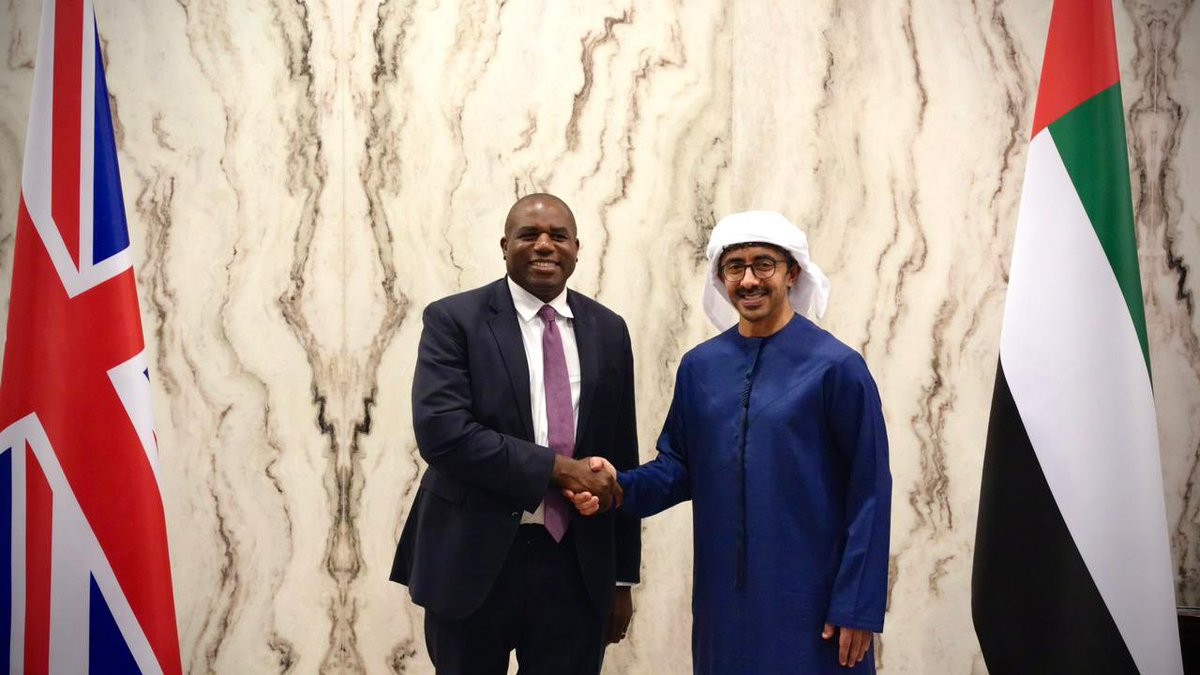
The UK was uniquely placed to avoid a massacre in Sudan’s el-Fasher but failed to act due to “political capture” by the United Arab Emirates and a desire to maintain good relations with Abu Dhabi, a British parliamentary committee has been told.
Human rights investigator Nathaniel Raymond appeared before parliament's International Development Committee on Tuesday to testify about Britain’s response to the situation in the North Darfur state capital, where an estimated 60,000 people were slaughtered by UAE-backed paramilitaries in October 2025.
He told MPs in a written submission that the UK, which as penholder for the Sudan issue at the United Nations was responsible for driving international response to the crisis, was the “best hope” for stopping “what we believed would become one of the single largest mass casualty events of the 21st Century”.
Instead, Raymond said, repeated warnings and recommendations delivered across two dozen private briefings were ignored, questioned or dismissed.
Raymond told MPs he believed the UK’s Foreign, Commonwealth and Development Office (FCDO) prioritised the British government’s “economic, security, and diplomatic relationships with the UAE above preventing the intentional starvation, forced displacement, and the genocidal slaughter of tens of thousands of civilians living in el-Fasher and its surrounding communities”.
New MEE newsletter: Jerusalem Dispatch
Sign up to get the latest insights and analysis on Israel-Palestine, alongside Turkey Unpacked and other MEE newsletters
Fears for el-Fasher grew in the summer of 2023, after the paramilitary Rapid Support Forces (RSF) had killed more than ten thousand Masalit Sudanese in el-Geneina, another city in Darfur.
That massacre has been described as a genocide by the US government and several human rights groups. Raymond said it quickly became clear that el-Fasher and the camps that housed Sudanese displaced in the genocide waged 20 years previously were the next target.
As founding director of the Humanitarian Research Lab (HRL) at the Yale School of Public Health, Raymond was first asked to brief the FCDO in July 2023, where he urged for a UN peacekeeping intervention.
UAE pressure on UK
By April 2024, the HRL had established that the siege of el-Fasher - an area held by the Sudanese army with the population comparable to three-quarters of the Gaza Strip - had begun.
The monitoring group decided engaging with the British government was its best chance of avoiding a catastrophe.
Raymond met FCDO officials in London on 15 and 16 of May 2024, around the time that the UK was drafting UN Security Council Resolution 2736, which called for an unconditional ceasefire.
'They told me that the UK was facing significant private pressure behind the scenes from the UAE'
- Nathaniel Raymond, war crimes investigator
During the meeting with officials focused on Sudan, organised by the atrocity prevention team, Raymond presented evidence gathered through an analysis of public phone records that appeared to show people moving between RSF-held areas of Sudan, the UAE, Somalia’s Bosaso and Addis Ababa.
Ethiopia and a military base in Bosaso have since emerged as key routes that the UAE has supplied the RSF with weapons, equipment and mercenaries, as previously reported by MEE.
The movements, Raymond said, could be linked to Abdel-Rahim Dagalo, the brother and second-in-command of RSF leader Mohammed Hamdan Dagalo, better known as Hemedti.
According to Raymond, the British officials asked him to publicly release the phone data analysis linking UAE-based facilities to the RSF.
“They told me that the UK was facing significant private pressure behind the scenes from the UAE limiting its ability to affect the situation,” he told MPs.
“In other words, HMG [His Majesty’s Government] was asking a private research lab in an American university’s epidemiology department, not GCHQ or the SIS [Secret Intelligence Service], to provide support for efforts to confront the UAE for its covert support to the RSF.”
This, Raymond suggested on Tuesday, showed the "fundamental political capture" of the UK government by the UAE.
Publicly releasing the analysis would have exposed the tracking system and allowed the RSF and UAE to close its security loophole, so Raymond said he declined as it was needed to predict further attacks.
Eventually, the tracking mechanism was exposed when Human Rights Watch reported on the training of Colombian mercenaries in the UAE for the RSF’s use in Sudan.
UAE orders attack on el-Fasher
The next day, Raymond recalled, he and representatives of NGOs met officials from the UK’s Sudan and atrocity prevention teams.
He said officials told the humanitarians that they could only warn that el-Fasher was on the brink of collapse once, or risk being accused of “crying wolf”.
The officials also made clear, he said, that backing Resolution 2736 was the most the UK could commit to and that it would not include consequences for foreign backers of warring parties like the UAE.
Resolution 2736 was adopted on 13 June 2024, and el-Fasher witnessed a brief period of respite when RSF attacks paused.
“Around that time, HRL was told by a source with direct knowledge of RSF’s internal operations that Abu Dhabi had directed Hemedti to pause the attack on el-Fasher so that the UAE could assess whether there would be any serious political consequences from the resolution’s passage,” Raymond said, referring to Mohamed Hamdan Dagalo, the RSF leader commonly called Hemedti.
HRL passed that information on to the FCDO, he said, urging consequences for the UAE if the resolution is violated.
“FCDO made it clear that there should be no expectation of specific unilateral or multilateral consequences for violations of UNSCR 2736,” Raymond told MPs. “Once Abu Dhabi assessed there would be no consequences, the attack resumed.”
Later that month, Raymond was told by a UN member state that the UAE had blocked him from speaking about bombing damage in the United Nations chamber.
David Lammy's staff seek help
Raymond described to MPs how he received a call from then foreign secretary David Lammy’s staff in January 2025.
Lammy and his aides were in N’Djamena, Chad, after visiting refugee camps filled with Sudanese who had fled the el-Geneina genocide, and asked if Raymond could provide them with the phone number of the African Affairs Desk at the White House National Security Council.
'FCDO said nothing about the sacking of Zamzam, despite the foreign secretary hosting a multinational donor conference on Sudan'
- Nathaniel Raymond
Raymond says he took the opportunity to explain the dire situation in Zamzam, a camp outside el-Fasher housing hundreds of thousands of people of ethnicities targeted by the RSF’s precursor in the 2003-2005 Darfur genocide.
“I warned that Zamzam IDP Camp, just south of el-Fasher, with an estimated population of more than 500,000 people currently in famine conditions, was being bombarded by advanced weapons systems from the UAE,” Raymond told the committee.
“I made it clear that this bombardment should be seen as a preface to RSF attacking the IDP camp.” In April 2025, as Lammy hosted a Sudan donor conference in London, the RSF seized Zamzam.
“Humanitarian and healthcare workers were forced to beg for their lives and were executed on camera; women and girls were taken as sexual slaves and tortured, and large portions of Zamzam IDP camp was systematically burned,” Raymond recalled.
“FCDO said nothing about the sacking of Zamzam, despite the foreign secretary hosting a multinational donor conference on Sudan at the very moment this atrocity was occurring. HRL is not aware of any UK statements being released.”
Genocide in el-Fasher
By September 2025, HRL analysis of satellite imagery reported by MEE showed the RSF had built 31km of earth berms around el-Fasher, creating what Raymond has described as a “kill box”.
Raymond says an FCDO official described to him that month their despair about the lack of any possible action by Prime Minister Keir Starmer’s government with the city on the verge of falling to the RSF.
A month later, the Rapid Support Forces stormed el-Fasher. Videos, photographs and satellite imagery have shown widespread massacres committed by the RSF in el-Fasher against civilians.
Survivors have described to MEE witnessing summary executions, rape and various other kinds of abuse.
Hours before the fall of el-Fasher, ceasefire talks in Washington collapsed as the UAE refused to address the crippling 18-month siege on the city.
HRL analysis suggests at least 60,000 people were killed by the RSF in that attack and its aftermath.
According to Raymond, an FCDO Atrocity Prevention official reached out to him on an encrypted chat and questioned whether the number of civilians killed was too high, continuing the conversation in a phone call.
“In that conversation, I came to believe that this estimate of at least 60,000 people killed by the RSF was a political problem for the FCDO,” Raymond told MPs.
“This FCDO official then asked if HRL could brief FCDO on the estimated number of people killed, and asked HRL to include UN officials. FCDO never scheduled that briefing and it did not occur.”
Raymond believes that the “genocidal” massacre in el-Fasher was “arguably the most accurately predicted mass atrocity in human history”.
“The timeliness, granularity, accuracy, and actionability of the intelligence HRL and others provided FCDO personnel in real time was more than sufficient to support the development of robust policy options that could have prevented the El Fasher massacre,” he said.
“For example, direct sanctions against UAE officials, at minimum, could have been used to interdict the clandestine UAE pipeline of advanced weaponry flowing to the RSF.”
He warned on Tuesday that the same mistakes were being repeated with el-Obeid in southern Sudan's Kordofan currently under siege and attack.
Raymond also said the "greatest accountability" for the UAE's complicity in atrocities in Sudan would be a public boycott, with people "stopping shopping at Duty Free" in Dubai and Abu Dhabi.
"If people in Manchester were burning Emirates jerseys we would be having a very different conversation," he said, in reference to football team Manchester City being owned by Abu Dhabi.
middleeasteye.net