
Hezbollah Links Ceasefire Stance to Iran Track
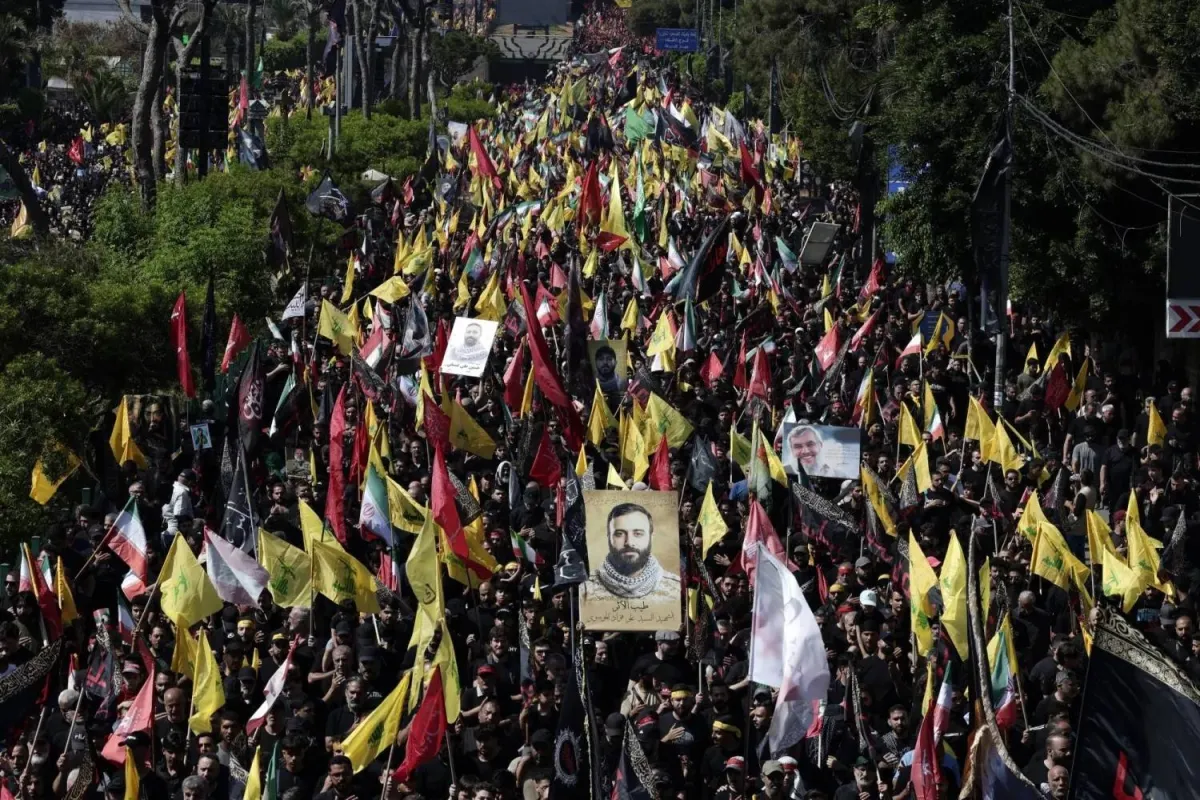
Israeli escalation in southern Lebanon has slowed, but not stopped, as Hezbollah seeks to cement a two-track position: declaring commitment to the ceasefire while documenting Israeli violations.
The latest came Saturday, when Israel struck the outskirts of Nabatieh. The Israeli military said it targeted Hezbollah members who had approached its positions.
Despite continued Israeli strikes in the South and drone flights over Beirut’s southern suburbs, Hezbollah said after a strike near Zawtar al-Sharqiya that it remained committed to the ceasefire. It called the Israeli army’s actions a “flagrant violation” of the agreement and said it was documenting all Israeli breaches.
Hezbollah part of the Iranian track
Political writer Harith Suleiman said Hezbollah’s insistence that it remains committed to the ceasefire, while documenting Israeli violations, “does not reflect a position within the Lebanese track, but falls within the framework of understandings underway between Iran and the United States.”
He said the group was acting as part of that track.
“Hezbollah wants Iran, not Lebanon, to negotiate on its behalf,” Suleiman told Asharq Al-Awsat.
“It is trying to make Lebanon part of the negotiations between Iran and the United States, and to present the ceasefire as part of an understanding between America, Israel and Iran, not as part of the Lebanese track.”
“When Hezbollah says it is committed to the ceasefire while Israel is violating it, it is effectively sending a message to Iran. It is saying: The agreement we are part of is being violated, and you, together with the United States and Israel, must act. That is why Hezbollah is part of the Iranian track, not the Lebanese track.”
Commitment tied to Iran talks
Suleiman said Hezbollah’s documentation of violations, coupled with its repeated commitment to calm, pointed to the continued existence of negotiation channels between Tehran and Washington.
“As long as negotiations between the Americans and Iranians are going well, Iran does not need Hezbollah to create a problem to improve its negotiating position. That is why Hezbollah is committed to calm and to the agreement. But if Iran decides to open a front or create a crisis, Hezbollah will be ready to move in that direction.”
Asked about the Hezbollah secretary-general’s Ashura speech, Suleiman said: “There is a difference between ideological rhetoric and operational conduct. Deals and understandings are built on practical steps, not slogans or ideological positions. What determines the actual course is what happens on the ground, and that remains tied to what Iran wants and decides.”
Hezbollah abides by what Iran agrees to
Retired Brig. Gen. Yarub Sakher said Hezbollah’s stated commitment to the ceasefire, alongside its documentation of Israeli violations, showed that its decision was tied more to Iranian understandings than to the Lebanese-Israeli negotiation track.
“When Hezbollah says it is committed to the ceasefire, it is sending a clear message that it abides by what Iran agrees to,” Sakher told Asharq Al-Awsat.
“During negotiations with the United States in Switzerland, Tehran reached an understanding to halt military operations and attacks on different fronts, including the Lebanese front. That is why Hezbollah is declaring its commitment to this track.”
“This position is not tied to the ongoing Lebanese-US-Israeli negotiations, which may lead to consolidating the ceasefire or to later security arrangements. It is meant to entrench the Iranian view.”
Documenting violations: building a case for escalation
Sakher said Hezbollah’s announcement that it was documenting Israeli violations “does not change the reality, because these violations are documented daily by the Lebanese state and the Lebanese army, and are also monitored by surveillance systems and satellites.”
“The documentation itself is not new, but it carries political significance.”
“Hezbollah is using this documentation to build a narrative it can use later if Iran decides to reopen the front. It would then say it showed strategic patience for a long time, documented the violations and remained committed to the ceasefire before justifying any new escalation.”
“This is exactly what it did before the latest confrontation, when it spoke of months of restraint before moving to military action.”
“There are Lebanese forces influenced by Hezbollah’s position that are betting on a US-Iranian understanding and, in practice, trying to give that track precedence over the Lebanese negotiation track.”
“At the same time, the US administration is treating the separation between the two files with a degree of political oversimplification, despite attempts by US Secretary of State Marco Rubio to address this gap.”
aawsat.com