
Aoun Optimistic on Best Possible Deal for Lebanon Banks on US Role
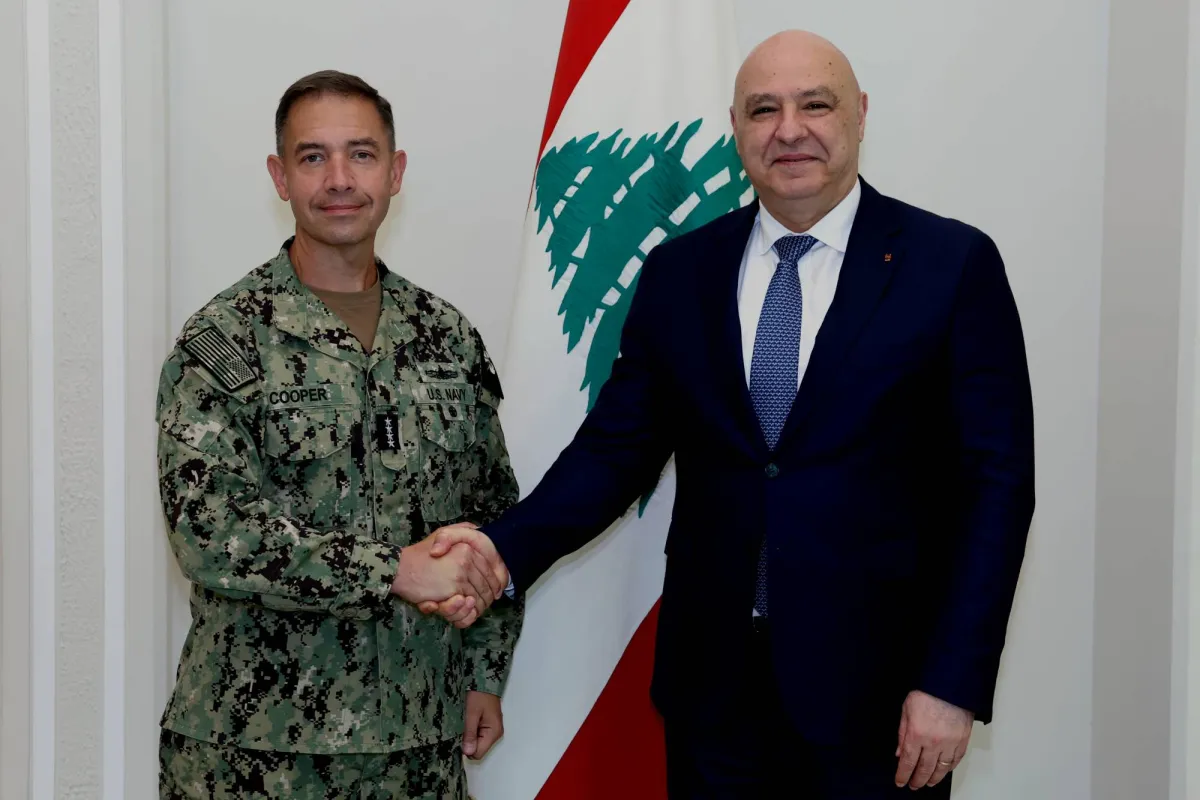
In one phrase, Lebanese President Joseph Aoun answers critics of the framework agreement Lebanon and Israel signed late last week, an agreement he admits is “not ideal”, “Give me the alternative.”
For more than three years, Lebanon has been reeling from the fallout of Hezbollah’s successive “support” wars, first for Gaza in late 2023 and then for Iran on March 2 in wake of the war with the United States and Israel. Still, visitors to Aoun come away with a clear impression that the president is optimistic about the path opened by the agreement.
A senior Lebanese source said the reality created by those wars has added to Lebanon’s burden. Beirut had been negotiating over Israel’s withdrawal from five hills it occupied in the first round.
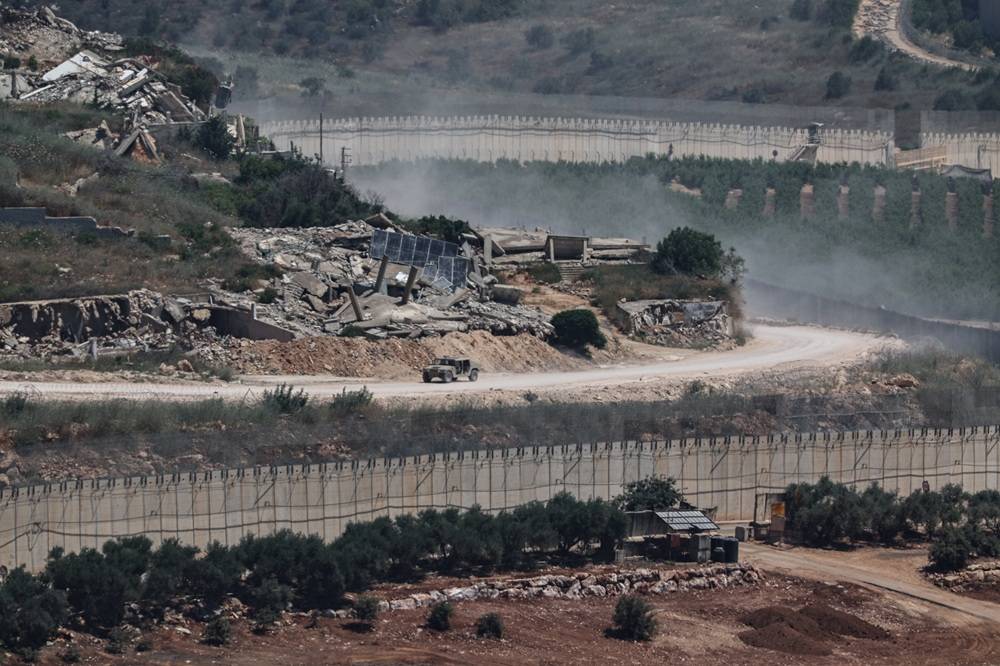
It then found itself negotiating under fire and occupation, as Israel’s presence expanded to the outskirts of Nabatieh in the east and Tyre on the coast, seizing Bint Jbeil in between.
The source placed direct responsibility for the war on Hezbollah. “Had it not been for its six rockets, which it fired last March, we would not be in this position today,” the source said.
The agreement is the result of facts imposed by the battlefield and by Lebanon’s condition as it buckles under rising human and material losses, with no clear path to a solution, it added.
A framework, not yet an agreement
Still, the source insisted the agreement “is not bad. More precisely, it has not become an agreement yet. It is a framework agreement that sets broad guidelines, pending the fine details that will be negotiated gradually.”
Lebanon is betting on the new US momentum to press Israel into making concessions on those details, it continued.
The clearest sign that the agreement is not bad, according to the source, “was Israel’s fierce rejection of it at first. That rejection would not have turned into approval without the major US pressure applied in the final hours before signing.”
The second sign was how quickly Israeli leaders moved to craft their own version of the agreement, “which has nothing to do with the truth,” the source said.
“Ninety percent of what Israeli Prime Minister Benjamin Netanyahu said is not true,” it stressed.
US support
Lebanon sees clear US support as its best weapon against Israel’s lack of interest in a solution and its tilt toward constant escalation.
The strongest proof, Lebanese officials believe, is that US President Donald Trump has called Aoun twice so far. Both calls were highly positive, as were calls from other US officials who contacted Aoun more than once, including Vice President JD Vance and Secretary of State Marco Rubio, who remained in continuous contact with him.
The source asked: Can Lebanon afford to risk losing US support when everyone knows the Americans are the only party able to exert real pressure on Israel?
The source said Trump, in his latest call with Aoun, was very clear in adopting Lebanon’s demands for a full Israeli withdrawal “despite the disruptions.”
Trump also expressed readiness to help revive Lebanon and put it back on track. That track includes the return of displaced people, reconstruction, and extending state authority through its own forces across all Lebanese territory, a Lebanese demand above anyone else’s.
The Doha cell and a Hezbollah representative
The Americans are closely tracking developments in Lebanon.
Although Washington is separating what is being agreed on in the Pakistan with Iran track from the Lebanese-Israeli track, it is working in parallel on the Lebanese file. That includes setting up the cell provided for in the US-Iranian understanding to monitor the ceasefire in Lebanon.
The source said the committee would operate from a liaison point in the Qatari capital, Doha. It would include representatives of the United States, Lebanon, Qatar and Iran, as well as Hezbollah, likely the group’s representative in Tehran.
Ali al-Taher
When practical negotiations over the withdrawal began, Aoun proposed starting with an Israeli pullback from Kfar Tibnit and the historic Beaufort Castle, the last point reached by Israeli forces in their advance. The aim was to push Israeli forces away from Nabatieh after they had reached the city’s outskirts.
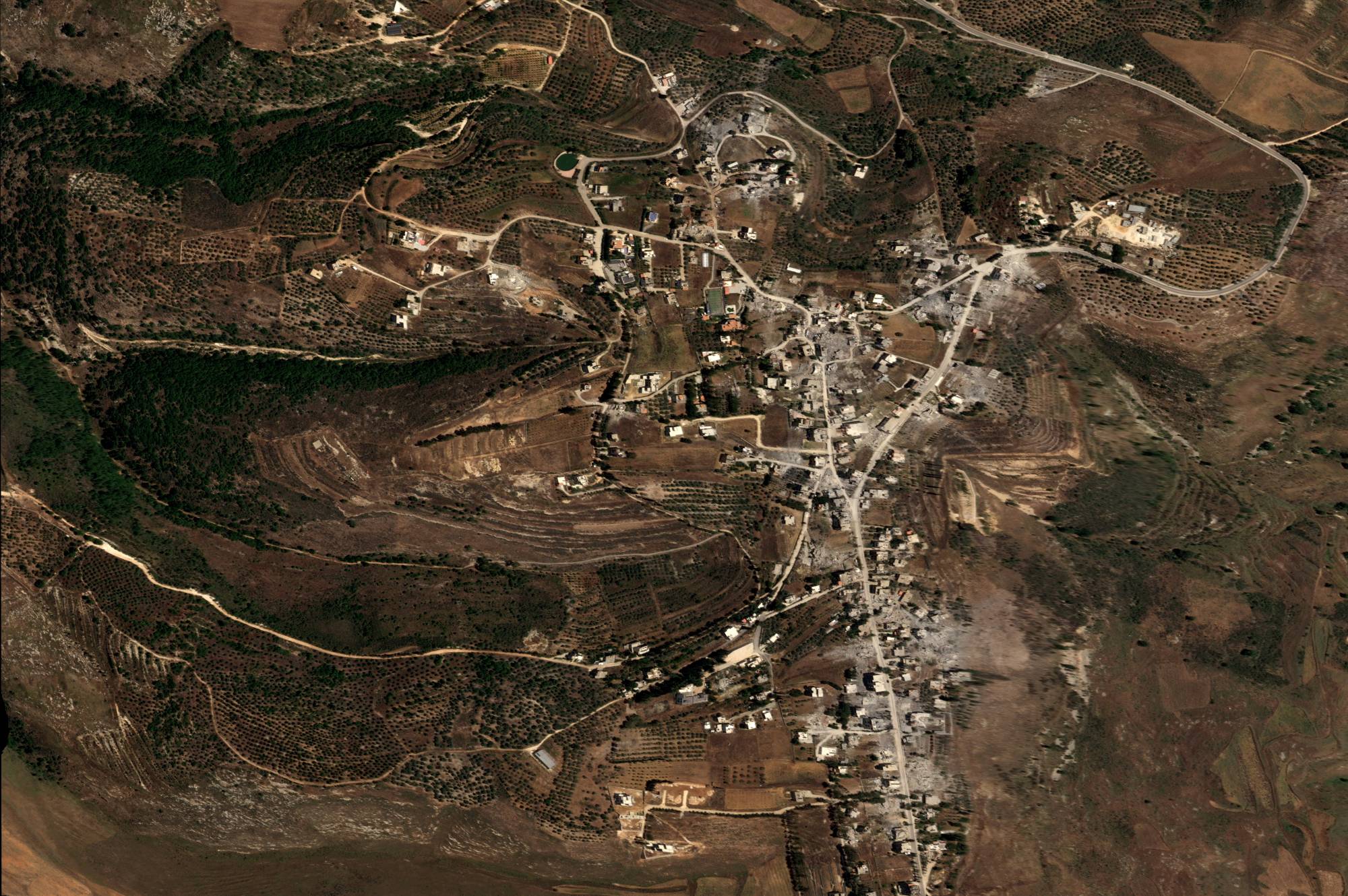
But the proposal collided with Israel’s determination to reach the Ali al-Taher heights, believed to contain a massive underground Hezbollah military facility.
Aoun called Rubio and proposed that the Lebanese army enter the area, while the Israeli army would withdraw beyond the Litani River. Rubio contacted the Israelis. Aoun, through intermediaries, contacted Hezbollah.
Israel approved the proposal. Hezbollah gave two contradictory answers. The first allowed the army to deploy without entering the facility. The second rejected the idea completely.
Later, Hezbollah settled on one answer: the matter was absolutely unacceptable. The proposal collapsed.
The area’s importance goes beyond Hezbollah’s facility. If Israeli forces position themselves there, they would directly overlook Nabatieh. From the other side, the heights overlook Israeli settlements, especially Metula, just a few kilometers from Nabatieh.
The idea of a withdrawal from that area was shelved. Instead, the focus shifted to another pullback from Zawtar al-Gharbieh and to the launch of a “pilot zone” there and the towns of Froun and Ghandourieh in the central sector.
That was the middle-ground solution. A withdrawal from the coastal line falls under the same equation because of its proximity to the southern border and, therefore, its high sensitivity for Israel.
aawsat.com