
Lebanons Pilot Zones Test Intl Trust in State
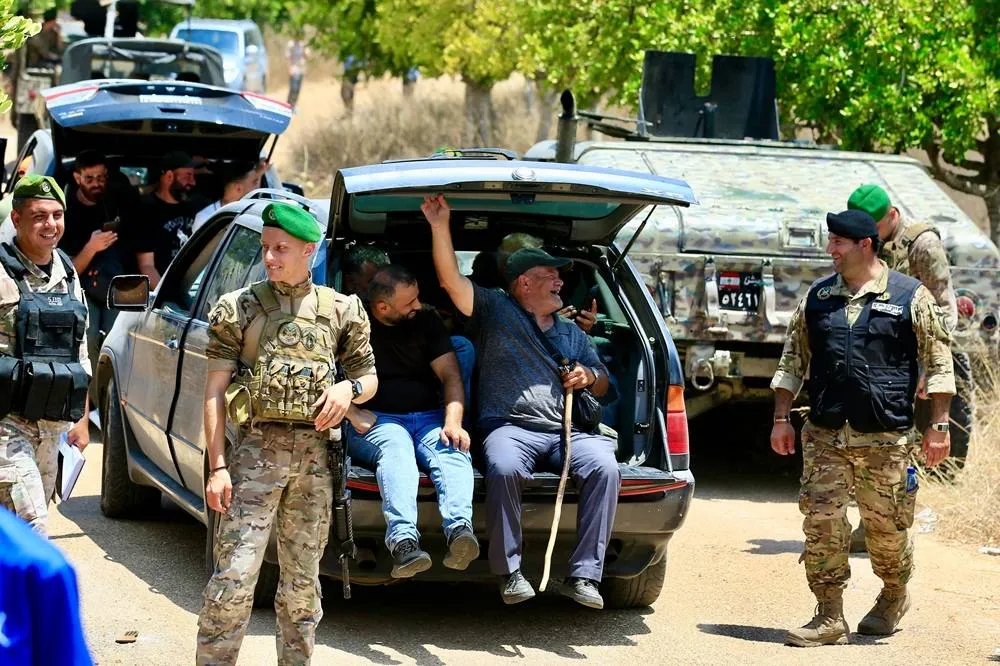
Attention is turning to the first phase of “pilot zones” in southern Lebanon, the first practical step in a mechanism being developed alongside US-sponsored negotiations between Lebanon and Israel.
The outcome is expected to determine whether the model can be expanded to other areas, as a seventh round of negotiations is due to be held in Rome in early August.
The choice of Zawtar al-Gharbiyeh, Froun and Srifa as starting points appeared to reflect more than military considerations. It followed understandings reached before the meeting between US President Donald Trump and Lebanese President Joseph Aoun earlier this week and was intended to establish a model that could be expanded gradually.
The first phase will assess not only the military deployment but the broader implementation process, before any move to later stages.
Mneimneh: A confidence-building approach
MP Ibrahim Mneimneh said the pilot zone plan was designed to address doubts over the Lebanese state’s ability to extend its authority.
“A gradual and parallel process involving the Israeli withdrawal, state deployment, bringing weapons under state control and reconstruction is the most realistic way to implement the commitments and prevent any party from exploiting the issue,” he told Asharq Al-Awsat.
Mneimneh said the main obstacle had been a lack of confidence in the state, while the complexities surrounding Hezbollah’s weapons could be used to derail the process.
He said the preferred approach was for Israel to withdraw from designated areas, followed by the deployment of the Lebanese state to establish security authority and exclusive control over weapons, alongside reconstruction and the continued extension of state control.
Treating the weapons issue as a single package could allow Israel to use it as a pretext to prolong its occupation and give Hezbollah grounds to retain its arms, he added.
A phased transition would also be more realistic than assigning the state a sweeping task at once, which could deepen doubts over its ability to deliver and delay pressure on Israel to withdraw while state capabilities were being built.
Mneimneh said Lebanon had begun rebuilding confidence with the US and international community, but warned that the time would be critical.
“Prolonged deadlines could derail the entire idea and allow Hezbollah to cast doubt on the intentions behind the process and its effectiveness,” he said.
The Israeli withdrawal and the restoration of state authority must proceed at the same time under a clear and rapid timetable, he urged.
“Any open-ended deadlines will be interpreted as entrenching the occupation,” the MP said, calling for a swift withdrawal alongside international support to strengthen the state and the army.
Mneimneh said Hezbollah’s objections had been expected, though some recent statements were less confrontational than usual and appeared to show a degree of acceptance of the new reality.
He said it was too early to draw firm conclusions.
He also described Parliament Speaker Nabih Berri’s position as significant, noting that Berri had welcomed the process and said it was consistent with his previous demands.
Mneimneh stressed that the pilot zones were not a substitute for an Israeli withdrawal, which he described as a non-negotiable right, but a mechanism to facilitate it and prevent Israel from citing reasons to remain.
Karam: Success could open a path to recovery
Fadi Karam, an MP from the Lebanese Forces’ Strong Republic bloc, said the army’s deployment in the pilot zones would test both the Lebanese state and the international community.
Success would help restore state authority and end illegal weapons, while failure would have serious consequences for Lebanon, he told Asharq Al-Awsat.
Karam said the zones posed a new challenge for the state and the army in imposing security and extending state control.
The US has also faced the task of securing the conditions needed for the army to deploy and operate freely, preventing Israeli obstruction and continuing to support and strengthen the military, he remarked.
He said the process would also depend on Hezbollah not obstructing it.
“But if the Lebanese state has made a firm decision, matters will move in the right direction,” he said.
Karam stressed that a successful deployment would strengthen international confidence in the Lebanese state, particularly in Washington.
“Success would mark the beginning of a process to rescue Lebanon and free it from illegal weapons and armed factions operating outside state authority,” he added.
The next stage would extend state and army authority to broader areas, he said, allowing for more serious action on illegal weapons alongside an end to the Israeli presence on Lebanese territory.
Karam described the operation as both a test of confidence and a security test.
“The Lebanese army is capable of undertaking it, but it requires a clear political decision to protect the process and ensure its success,” he said.
“The state and the army cannot be allowed to fail in this mission because failure would be a catastrophe for Lebanon.”
He said progress on the ground would have direct implications for the next round of negotiations with Israel.
aawsat.com