
Ahead of Israels elections Bennett rejects twostate solution as Eisenkot surges in polls
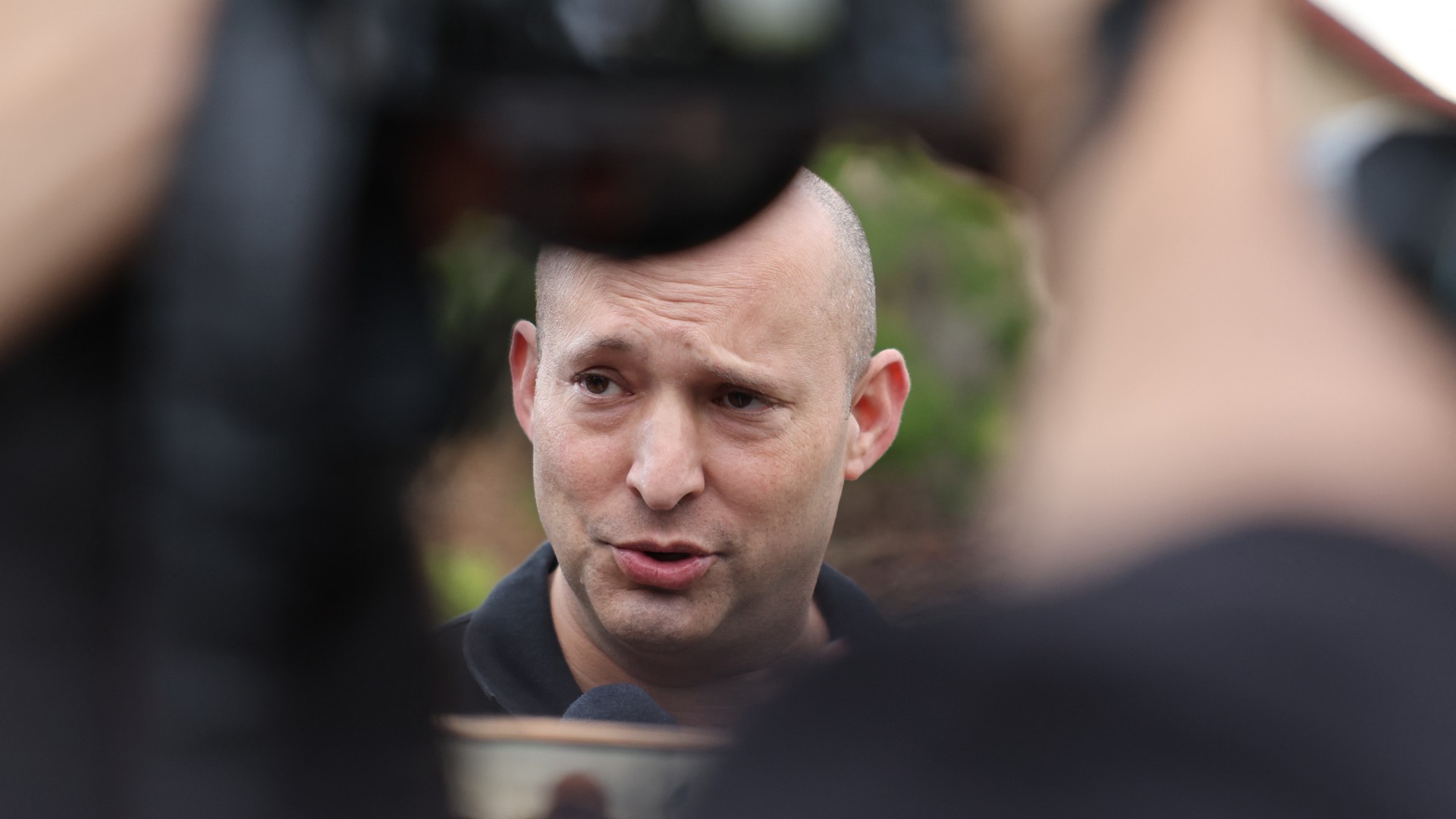
Israeli opposition leader and former Prime Minister Naftali Bennett said that he “will not allow a Palestinian state to be established”, even at the cost of normalisation with Saudi Arabia.
“I am not giving up territory, period,” Bennett said in an interview with Israeli Channel 12, stating repeatedly that he will advocate for sweeping reforms across the Israeli state if elected.
Israel is gearing up for a general election on 27 October, widely seen as one of the most consequential in the country’s history, which could end Benjamin Netanyahu’s tenure and that of his right-wing Likud Party.
A recent poll by the Israeli newspaper Maariv showed Likud dropping to 20 seats, followed by Yashar party, led by former army chief Gadi Eisenkot, which reached a record poll high of 23 seats. Bennett's Together party came third in the polling with 17 seats.
The two-state solution is central to discussions surrounding the Abraham Accords, the normalisation agreements between Arab states and Israel.
New MEE newsletter: Jerusalem Dispatch
Sign up to get the latest insights and analysis on Israel-Palestine, alongside Turkey Unpacked and other MEE newsletters
Saudi Arabia, a crucial regional partner for the US, has yet to join the accords.
While serving as army chief, Eisenkot publicly advocated closer ties with Saudi Arabia, saying the two countries should work together to counter Iran's influence in the region. He also said Israel would be willing to share intelligence with Riyadh to confront Tehran.
Push for reform
“I am the most suitable person to lead the historical correction that needs to be made here in the State of Israel,” said Bennett in the interview.
The Channel 12 presenter repeatedly accused Bennett of "dodging every question" on the establishment of a Palestinian state and whether his previous coalition with Yair Lapid, the centrist former prime minister and leader of the Yesh Atid party, had been a "failure".
'I am the most suitable person to lead the historical correction that needs to be made here in the State of Israel'
– Naftali Bennett, on Channel 12
Throughout the interview, Bennett insisted that his main focus is fixing Israel's leadership.
Instead, he said that “a lot of dramatic and very difficult actions need to be taken, ones that haven't been done since the establishment of the state,” such as integrating the Haredim into the workforce.
The Haredim, ultra-Orthodox Jews, have long been exempted by the Israeli state from compulsory military service, a subject that remains a contentious debate among Israelis.
Different Israeli governments over the years have discussed ending this exemption as Haredi communities continue to grow.
Eisenkot shares Bennett's stance on the issue, having repeatedly criticised Netanyahu and his coalition partners for failing to advance legislation on the matter.
Netanyahu, meanwhile, has prioritised preserving his alliance with the Haredim throughout his time in office.
Gaza and Arab votes
Bennett’s opposition to a two-state solution is nothing new: he has long maintained that he will do everything in his power to prevent the establishment of a Palestinian state.
He went further in 2018, saying that if he became defence minister, he would authorise a "shoot-to-kill" policy against Palestinians attempting to cross the Gaza-Israel border.
When asked whether this policy would apply to children, he replied: “They are not children. They are terrorists.”
Unlike Bennett, who has held political roles as prime minister and minister of defence, economy and education, Eisenkot comes from a strictly military background, having served as chief of staff of the Israeli military between 2015 and 2019.
The son of Moroccan immigrants, Eisenkot is widely known for developing the “Dahieh doctrine”, Israel’s offensive military strategy named after the southern suburbs of Beirut.
The doctrine advocates applying disproportionate force against civilian infrastructure in areas where armed groups are alleged to operate.
Eisenkot has gained the Israeli public’s sympathy following the deaths of his son and two nephews who served in the army during offensives in Gaza.
Lapid and Bennett governed together between 2021 and 2022 in a coalition that included an Arab party, and which ultimately collapsed in late 2022.
Eisenkot now faces a dilemma over the votes of Palestinian citizens of Israel: while he needs the support of Arab parties in parliament to form a majority, bringing them into his coalition risks alienating centrist and right-wing voters.
middleeasteye.net