
Boulos: Benghazi and Tripoli Representatives Put Differences Aside for Libyas Sake
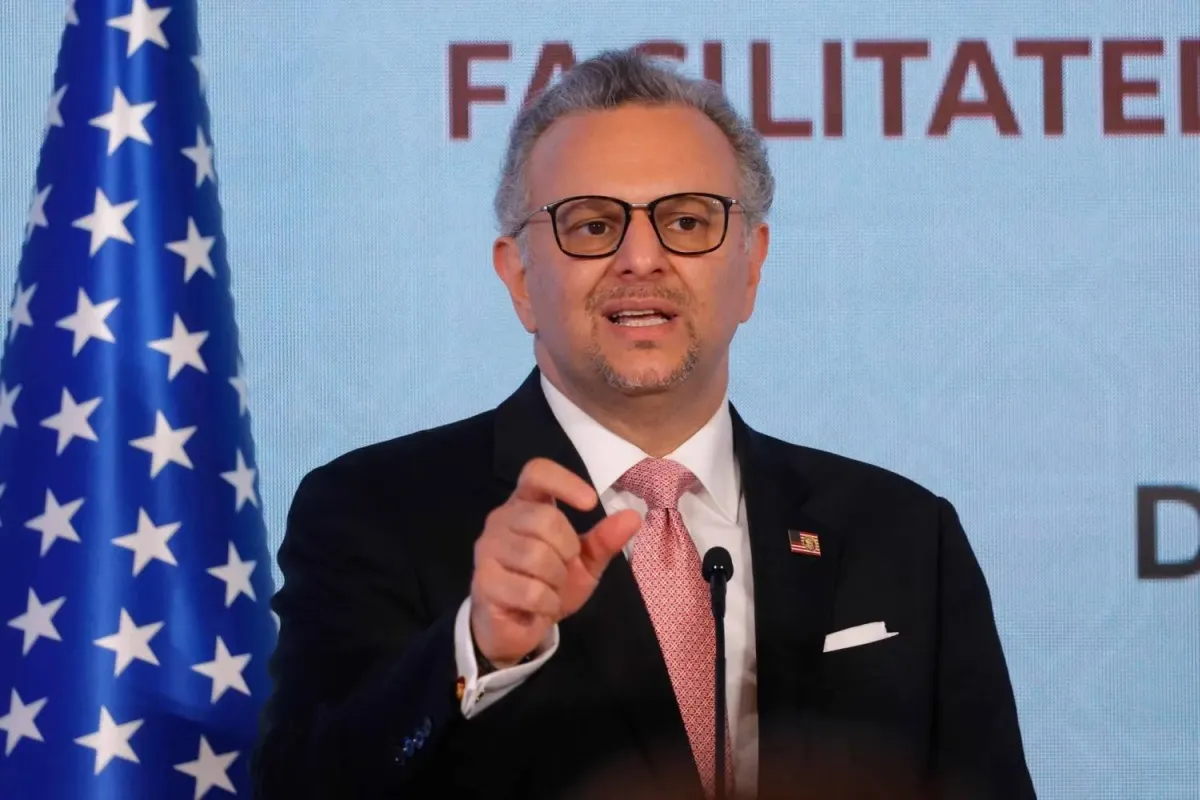
Massad Boulos, US President Donald Trump’s senior adviser for Arab and African affairs, has defended Washington’s diplomatic efforts to resolve the Libyan crisis, saying many representatives from the country’s east and west have set aside their differences in the nation’s interest.
In written responses to questions from Asharq Al-Awsat, Boulos said US efforts in Libya had produced gradual but tangible improvements since July 2025.
He pointed to agreements on a unified development program and, subsequently, a unified budget. He also cited Washington’s success in bringing together military forces from eastern and western Libya in Sirte to participate in the Flintlock 2026 exercises, expressing hope that such steps would help build trust among military personnel.
Boulos called for continued efforts to establish unified governance between eastern and western Libya to strengthen stability. He said national unity was essential to legitimacy and democratic elections, and that any political initiative must be inclusive and bring together a broad coalition of actors from different regions and institutions.
Washington, he added, sought to maintain balance by consulting a wide range of constituencies, visiting different regions and encouraging inclusive leadership.
UN Road Map
Asked why the United States had launched an initiative when a UN road map was already in place, Boulos said Washington supported the plan advanced by the UN Support Mission in Libya and was coordinating closely with Special Representative Hanna Tetteh.
US efforts, he explained, were intended to complement rather than replace the UN process. He stressed that Libya’s future must ultimately be determined by the Libyan people themselves.
Boulos noted that the final details of any unification agreement were for Libyans to decide, adding that the United States remained in continuous contact with all parties to help develop a workable proposal.
He rejected suggestions that Washington’s diplomatic initiative was driven by competition with Russia and China, describing that interpretation as inaccurate.
According to Boulos, a broad coalition of countries with diverse interests supported the initiative. He said several states shared an interest in seeing a unified Libya capable of maintaining stability, protecting its sovereignty and expanding economic opportunities after years of division.
Oil Sector
Boulos also dismissed claims that Washington’s sole priority was to guarantee the continued flow of energy. He said the United States had supported Libyan efforts to improve the entire national economy, not only the oil sector.
Washington believed that resolving disputes over revenues and the distribution of resources would help create the conditions for lasting peace, he added.
Progress by the Libyan authorities, particularly the National Oil Corporation, had generated greater interest and investment from major US companies, according to Boulos. This included efforts to increase production at fields already under development and secure rights for new exploration projects.
Referring to his recent visit to Misrata in western Libya, where some parties have expressed reservations about the US initiative, Boulos noted that he had met members of the city’s Council of Elders and elected municipal leaders.
He underlined that those officials had direct knowledge of what was required to make municipal elections successful, and their perspective was essential to achieving a stable and unified Libya.
He further reaffirmed Washington’s commitment to engaging Libyans across all regions in support of a process led by Libyans themselves.
According to leaked reports, the US initiative is based on a proposal under which Saddam Haftar, deputy commander-in-chief of the Libyan National Army, would replace Mohamed al-Menfi as head of the Presidential Council. In return, Abdulhamid Dbeibah, prime minister of the interim Government of National Unity, would remain at the head of a unified government.
aawsat.com