
This is a Jewish state: Arabic banned at work for Palestinian citizens of Israel
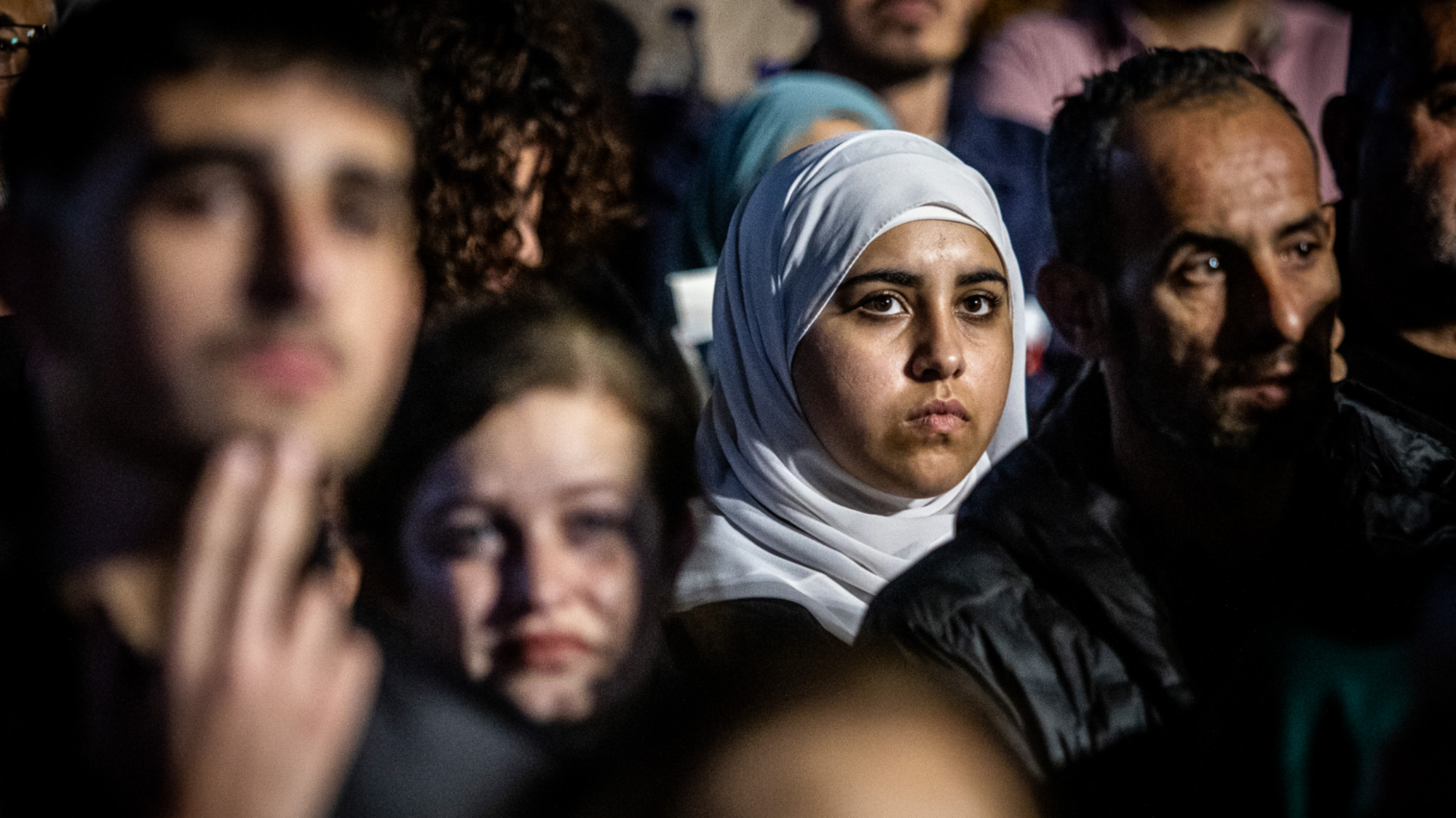
Salma* was taken aback when her manager sent a message to the staff WhatsApp group instructing employees to acknowledge a ban on speaking Arabic in their shop.
The 19-year-old Palestinian citizen of Israel and her colleagues thought it was absurd and ignored it.
"But the next day we were frightened of her and tried to stay silent," she told Middle East Eye.
The silence did not last.
One colleague briefly spoke in Arabic while saying she was taking a box to the storeroom, even using the Hebrew word for "storeroom", making it clear she was talking about work.
New MEE newsletter: Jerusalem Dispatch
Sign up to get the latest insights and analysis on Israel-Palestine, alongside Turkey Unpacked and other MEE newsletters
The manager erupted.
"She started shouting, kicking boxes and telling us we were forbidden to speak Arabic," Salma recalled.
"She told us: 'This is a Jewish state. Here we speak only Hebrew. Arabic stays at home.'"
Salma's experience is one of several reported in recent months by Palestinian workers who say they have been told not to speak Arabic at work.
The complaints span hospitals, pharmacies and retail stores.
One of the most recent cases involved a Palestinian employee at a Good Pharm branch in Jaffa. Local media published WhatsApp messages in which a manager allegedly threatened workers who spoke languages other than Hebrew, claiming that hearing Arabic could deter customers traumatised by the 7 October attacks.
Good Pharm said it employs and serves people from all sections of society, is committed to equality, and would address the manager's conduct internally. Palestinian workers, however, say little has changed.
Feeling the racism
In Salma's case, everyone on the shop floor was Palestinian. The manager was the only Jewish Israeli present.
She said the ban remained in force even when the shop was closed and there were no customers.
'I had heard about racism before this, but I never understood the feeling until now'
- Salma, Palestinian citizen of Israel
Several employees protested. They were then left without shifts for around two months before being offered transfers to branches that were difficult to reach.
"Instead of removing the manager or holding her accountable, the company preferred to ask us to change our workplace," she said.
Although the retailer says it condemns racism and discrimination, Salma says the experience has stayed with her.
Now preparing to start university, she says she is more anxious about entering another predominantly Jewish environment.
"I had heard about racism before this, but I never understood the feeling until now," she said.
"It was the first time I understood what it means for someone to treat you badly simply because of your identity."
Rise in discrimination
Palestinian citizens of Israel are the native population of historic Palestine who stayed behind after Zionist militias displaced roughly 750,000 Palestinians during the 1948 Nakba to create the state of Israel.
Today, the community numbers approximately two million people, making up about 20 percent of Israel's population.
Since October 2023, they have faced increased arrests, disciplinary proceedings and job losses over political expression relating to the genocide in Gaza.
Lawyers say the workplace cases coming to light are likely only a fraction of those taking place. What has changed, they argue, is not the existence of discrimination but the confidence with which it is expressed.
"Most of the cases now reaching my office from Jewish workplaces involve racism," Alya Zoabi, a lawyer specialising in employment law, told Middle East Eye.
"There has been a significant increase."
Zoabi described one case in which a young Palestinian employee suffered a panic attack after months of discriminatory treatment by her manager.
An ambulance was called, she said, but the employer sent the woman to hospital alone.
In another case, a pregnant Palestinian employee was dismissed without the legally required authorisation.
Legal challenges
In 2018, Israel passed the controversial Nation-State Law, declaring Hebrew the state's sole official language while downgrading Arabic to a language with "special status".
Although the law preserved the practical use of Arabic in government services, education and public signage, Palestinians say pressure on expressions of their identity has intensified since then.
According to Zoabi, the challenge from a legal point of view is often not recognising discrimination but proving an employer's motive to the standard required by the courts.
Israel's Equal Employment Opportunities Law prohibits discrimination on grounds including nationality, race and religion. It does not explicitly guarantee an unrestricted right to use any language in every workplace.
'When I stand in court, I feel I am both the lawyer and the client'
- Alya Zoabi, Palestinian lawyer
Legal experts say a blanket ban on Arabic, particularly in private conversations or where Hebrew is not required for the job, may amount to unlawful discrimination.
"But formal legal protection means little when enforcement is slow, costly and uncertain," Zoabi said.
"There has been a leniency towards our cases that cannot be ignored since 7 October," she added, saying claims potentially worth tens of thousands of shekels often end in settlements for only a fraction of that amount.
The financial risk discourages both workers and lawyers from pursuing cases, even when employees believe the discrimination is clear.
Both Salma and the Good Pharm employee ultimately abandoned plans to sue after being advised the cases would be lengthy, expensive and difficult to prove.
"When I stand in court, I feel I am both the lawyer and the client," Zoabi said.
"As a Palestinian woman in Israel, I experience this racism too."
*Name has been changed to protect the individual's identity
middleeasteye.net